Green Power Solutions
The world and mother nature are suffering from not only Climate Change but from a number of dictator rulers, increasing criminality and economic disorder.
Who We Are
About
Green Power Solutions (GPS) is a South Africa based organisation focusing on opportunities in Sub-Saharan Africa but open to business opportunities anywhere.
GPS’ focus is to develop and implement projects which would possibly:
- Mitigate Climate Change
- Create jobs
- Produce feed and food
GPS focus areas of business are:
- Bana Grass to Protein and Fuel – We are developing projects in 10+ countries Sub-Saharan Africa with local partners
- In-Situ Remediation of Groundwater – Such as the Vedanta owned KCM mine in Zambia. But we are also looking at Nitrate polluted ground water in most of Africa’s, cities due to seeping pit latrines.
- Floating Solar PV – There are many advantages, which you can learn more about in Solutions
- Geothermal
- Plastic recycling - Find out more
Team
Meet our Team

Tomas Persson
Tomas Persson is a Swedish national with a rich academic background in Political Economics, Law, Economics, and Computer Science from esteemed institutions such as Stockholm School of Economics and Stockholm University. Throughout his professional journey, he has held pivotal roles in water and wastewater treatment, sustainable energy solutions, and project management. He has founded and directed multiple companies, such as Precipco Ltd, AquaMatters (Pty) Ltd, and Ngonyezi Projects (Pty) Ltd, focusing on innovative solutions in the renewable energy and sustainability sectors.
Tomas has a vast experience from farming: Hemp in Sweden, Paw Paw and hydroponics in Hawaii, Kava-Kava in Tonga and is currently spearheading the production of organic plant-based protein and GreenCoal, using Bana grass and Moringa Oleifera in 10+ countries across Sub-Saharan Africa.

Mary Ipadeola
Mary Ipadeola is a corporate finance and sustainable business expert with 30 years of experience, specializing in impact investment and business growth strategies in the UK and Africa. She holds a business accounting degree from the University of East London, and specialized training in venture capital financing from the Kauffman Fellows Academy and the New York Institute of Finance. She is the founder of Mojere Investhub, which supports ethical startup financing. Mary launched the EBU50 Asset Fund to address wealth disparities among entrepreneurs over 50, and marginalized groups. As founder/CEO of RisingDive International, she empowers the African diaspora in venture entrepreneurship.
As a game-changer, her mission is to lead authentically, working in collaboration to address problems in the circular economy. Her expertise includes strategic design, business risk management, mergers and acquisitions, and funding. She manages deal flows exceeding £50M and delivers sustainability-focused masterclasses. Mary is also a mentor, particularly through the Diaspora Prosperity Accelerator Program. Her vision centers on ethical business, inclusive wealth, and conscious resource distribution.
The solutions we provide
Solutions
Bana Grass to Protein and Fuel

This Bana Grass project started as a fuel project 2,5 years ago when we noticed the steep price increase of Fossil Coal. It later on developed to first extract protein and fertilizer, before producing pellets for clean cooking stoves – Click here to download a presentation.
However, after Malawi, Zimbabwe and Zambia (and now Namibia and Lesotho as well) has declared state of disaster”, “national emergency” – in most parts of the countries –it is clear we need to take a second thought relying on annuals as main source of protein and oil as resources for our feed and food. And now in 2026-27 we are moving into a Godilla El-Ninio, which will be a disaster for most part of Sub-Saharan Africa.
According to the UN Food and Agriculture Organization (FAO), nearly 4 million hectares of African forests are being cut down each year, at almost double the speed of the world’s deforestation average.


An important driver of Africa’s deforestation is charcoal. Here, this inexpensive resource is the main cooking fuel for urban populations and, as these populations grow and demand for charcoal increases, deforestation intensifies. Aside from wood wastage, charcoal production is also responsible for high carbon emissions. Some of the most impacted African countries are Malawi and Zambia, where both rural and urban households heavily rely on charcoal as fuel for cooking and heating. Its production accounts for the main cause of forest destruction in the country, which has one of the highest deforestation rates in the world with a yearly loss of about 300,000 hectares of forested land.
Three billion people globally cook with dirty solid fuels such as charcoal and wood on open fires or traditional stoves that produce high levels of household air pollution (HAP), killing four million people annually, says the World Health Organization.

GPS has developed a farming and processing concept targeting the Plant-Based Organic Protein market and Pellet/Briquetting market for Clean Cooking stoves.
The general plan is to farm Bana Grass and or Super Napier and Chinese Juncao. These grasses are propagated by cuttings. To obtain optimum Protein concentration the acreage is harvested 6-8 times per year.
The process that follows is:
- Mechanical Fractionation
- Microwave Assisted Liquid Extraction
- Liquid Extraction
- Protein separation from liquid
- The press cake is used to make BioChar
Three billion people globally cook with dirty solid fuels such as charcoal and wood on open fires or traditional stoves that produce high levels of household air pollution (HAP), killing four million people annually, says the World Health Organization.
Find out more about the Farming and Propagation of Bana Grass.
View our presentation on Organic Plant-Based Protein and BioChar from Bana Grass.
In-Situ Remediation of Groundwater
Bioremediation is an engineered technology that modifies environmental conditions (physical, chemical, biochemical, or microbiological) to encourage microorganisms to destroy or detoxify organic and inorganic contaminants in the environment.
In-situ Remediation of groundwater has become one of the most widely used technologies for contaminated site treatment because of its relatively low cost.


However, we can take care of any contamination, except from desalinated water.
Floating Solar PV

- Floating solar offer both a reduction is evaporation and increased electricity generation.
- Dam surfaces offer high value space for Solar PV projects with no impact on use of the water for others.
- More efficient: proximity to water cools the panels, which gives greater efficiency (15%) and, possibly, doubles the life span of panels – effectively halving the generation cost.
- Advantageous for the water resource: solar panels covering the surface reduces algal growth and evaporation (up to 2 m/y)

Plastic Recycling
In the next decade, about 165 million tonnes of plastics are expected to reach their end-of-life in African countries.
The cost of the damage caused by marine plastic pollution in West Africa is estimated at around $10,000 to $ 33,000 per ton of plastic waste.
We are awaiting the result of the meeting below. One problem is that in the OECD countries and many other, you are paid to receive plastic waste but in Sub-Saharan Africa you have to pay to receive plastic waste.
Our Solution for Sub-Sahara Africa is: https://biocharpe.com/

Methane Capture
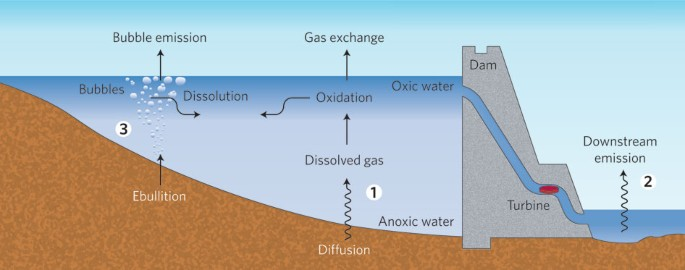
Methane is produced in sediments of freshwater when carbon-rich organic matter is decomposed by microbes in the absence of oxygen. Such as in Hydro Power dams.
What we do is to capture the methane as Location 2, burn and produce power/heat. This also attracts Carbon Credits.
Helium and Hydrogen Capture at Geothermal Springs
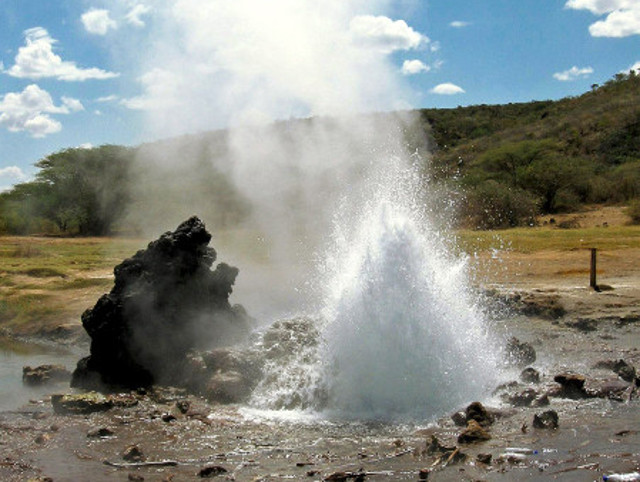
As previously mentioned, our focus is Sub-Saharan Africa. The East African Rift Valley stretches from Ethiopia in the north to Zimbabwe in the south and has hundreds of known and described hot springs. The hot springs in this Valley all release Hydrogen and Helium gases. GPS has teams in Ethiopia, Nigeria, Angola Uganda, DRC, Kenya, Burundi, Rwanda, Tanzania, Zambia, Malawi. Zimbabwe and Namibi. And a MoA with the Development Bank of Southern Africa.